logo
Home

blog about TPU Vs PU Key Material Differences for Product Performance

Certification
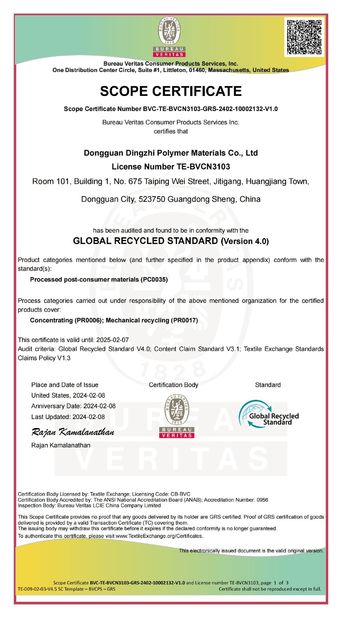
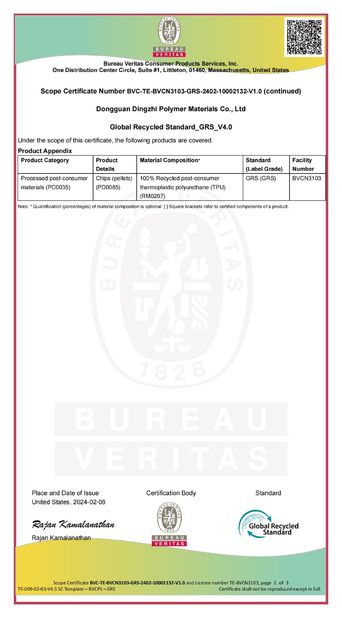
China Dongguan Dingzhi polymer materials Co., LTD certification
I'm Online Chat Now
Company Blog
TPU Vs PU Key Material Differences for Product Performance
Latest company news about TPU Vs PU Key Material Differences for Product Performance

In the polyurethane family, Thermoplastic Polyurethane (TPU) and Polyurethane (PU) are like twin siblings, widely used across various industries. However, they are not identical. Understanding their subtle differences is crucial for engineering material selection and product design. This analysis examines the physical property differences, application scenarios, and strategies for optimal material selection.

Why Material Choice Impacts Final Product Performance

Consider designing high-performance athletic footwear. The outsole requires exceptional abrasion resistance, cushioning, and tear resistance. Selecting PU instead of TPU could lead to premature wear, deformation, or even breakage during use, significantly compromising athletic performance. This isn't hypothetical - it's the real consequence of improper material selection. Understanding TPU and PU characteristics is key to avoiding such failures.

TPU vs. PU: Fundamental Concepts and Core Differences

TPU (Thermoplastic Polyurethane) is a thermoplastic elastomer that can be melted and reshaped at certain temperatures, offering excellent processability and recyclability. PU (Polyurethane) is a broader category encompassing various polymer types, including thermoset and thermoplastic variants. Their core differences lie in molecular structure:

  • Crosslinking Structure: This is the key differentiator. TPU features linear or slightly branched polymer chains with minimal crosslinking, providing superior elasticity and plasticity. Thermoset PU, however, develops a highly crosslinked 3D network structure, delivering excellent heat resistance, chemical stability, and mechanical strength at the cost of processability and recyclability.
  • Chemical Composition: TPU is a block copolymer consisting of hard segments (isocyanate and chain extenders for strength/rigidity) and soft segments (polyols like polyether/polyester for elasticity/flexibility). PU offers more compositional diversity through various polyol/isocyanate combinations. Notably, some TPUs technically fall under the PU category as thermoplastic polyurethanes.

Data Comparison: Physical Properties of TPU vs. PU

The following table compares key physical properties:

Property TPU PU
Hardness (Shore A/D) 60A-75D 50A-90D
Tensile Strength (MPa) 30-70 20-60
Elongation at Break (%) 300-700 100-600
Abrasion Resistance Excellent Good to Excellent
Chemical Resistance Good Excellent
Temperature Range (°C) -40 to +120 -60 to +150
Processing Method Injection molding, extrusion Casting, reaction injection molding
Recyclability High Low (thermoset)

Application-Specific Selection Guidelines

When to Choose TPU:

  • Products requiring repeated processing/recycling
  • Applications demanding high elasticity and flexibility
  • Components needing excellent abrasion resistance (e.g., shoe soles, protective cases)
  • Industrial parts requiring chemical/oil resistance (hydraulic seals, gaskets)

When to Choose PU:

  • High-temperature environments (automotive components)
  • Applications requiring superior chemical resistance (industrial coatings)
  • Structural components needing high load-bearing capacity
  • Products where permanent setting is required (insulation foams)

Cost and Sustainability Considerations

TPU generally commands a 15-30% price premium over conventional PU due to its specialized processing requirements. However, TPU's recyclability offers long-term sustainability advantages. Lifecycle analyses show TPU products can reduce material waste by up to 40% compared to thermoset PU in applications requiring multiple production cycles.

Pub Time : 2026-06-29 00:00:00 >> Blog list
Contact Details
Dongguan Dingzhi polymer materials Co., LTD

Contact Person: Ms. Chen

Tel: +86-13510209426

Send your inquiry directly to us (0 / 3000)