In the realm of rapid prototyping, fused deposition modeling (FDM) technology has emerged as a mainstream choice due to its convenience and flexibility. However, when constructing complex three-dimensional structures, FDM often faces time-consuming bottlenecks. To overcome this limitation, researchers are actively exploring alternative approaches, with hybrid FDM printing combined with thermoforming post-processing showing significant promise.
1. The FDM-Thermoforming Process: Accelerating 3D Printing and Expanding Applications
Traditional FDM builds three-dimensional objects by stacking molten filament layer by layer. While this method offers high precision, it becomes time-prohibitive for complex shapes or large components. The FDM-thermoforming process ingeniously simplifies printing to two-dimensional planes, then uses thermoforming technology to transform these flat structures into three-dimensional forms, dramatically reducing total manufacturing time.
In this hybrid process, FDM first prints a flat, pre-designed structure. This structure is then heated to a specific temperature to achieve pliability before being shaped into the target 3D form using molds or pneumatic pressure. After cooling, the final product emerges.
Polylactic acid (PLA), a biodegradable material with excellent thermoforming properties and low melting temperature, has become widely adopted in FDM-thermoforming applications. Its recyclability and biocompatibility make it particularly valuable for medical devices and food packaging. However, PLA's inherent rigidity limits its use in applications requiring flexibility.
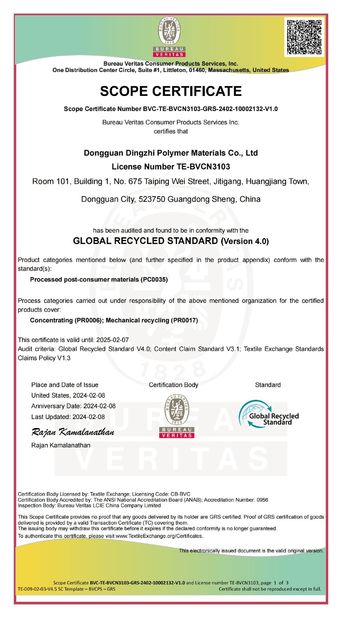
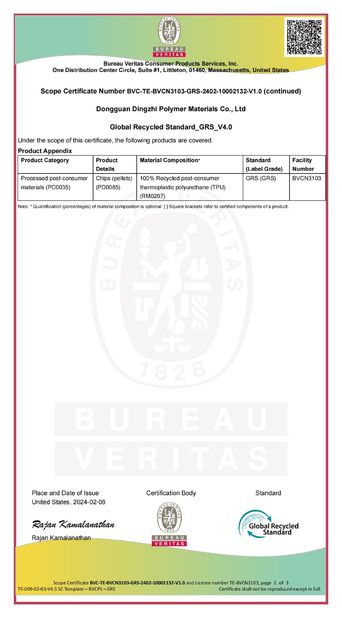
Thermoplastic polyurethane (TPU), with its rubber-like elasticity, offers superior abrasion resistance, weatherproofing, and impact absorption. Combining TPU with PLA enhances product comfort and functionality—for instance, in prosthetics or protective gear where TPU provides comfort while PLA maintains structural support.
2. PLA/TPU Multimaterial Composites: Synergistic Advantages
The strategic combination of PLA and TPU creates complementary performance characteristics that expand FDM-thermoforming applications. However, their differing physicochemical properties present bonding challenges at material interfaces. Current research focuses on three primary fabrication methods:
-
Direct multilayer printing:
Alternating PLA and TPU layers via FDM nozzle control, though prone to delamination
-
Premixed filaments:
Blending materials before extrusion, requiring advanced filament production techniques
-
Composite filaments:
TPU-reinforced PLA matrix filaments offering improved mechanical properties
Recent studies demonstrate that optimized printing parameters, mechanical interlocking designs, and biomimetic structures can significantly enhance interfacial bonding between PLA and TPU layers.
3. Thermoforming Temperature: The Critical Variable
Thermoforming temperature critically influences both dimensional accuracy and bond strength in PLA/TPU composites. Insufficient heating prevents proper forming, while excessive temperatures risk material degradation. Current research gaps include standardized testing protocols for multimaterial thermoformability and shape memory effects.
Preliminary studies have evaluated shape accuracy in thermoformed PLA components and characterized shape memory behavior through bending recovery tests. However, these methods require adaptation for assessing multimaterial systems.
4. Experimental Insights: Optimizing Thermoforming Parameters
-
An optimal temperature range exists where materials achieve sufficient plasticity without distortion
-
Interlayer bonding strength follows a similar temperature-dependent pattern
-
TPU content proportionally increases flexibility while reducing rigidity
-
PLA/TPU composites exhibit tunable shape memory properties
5. Future Directions
-
Advanced printing parameter optimization
-
Novel material formulations
-
Innovative thermoforming techniques like vacuum forming
-
Smart materials with adaptive properties
As this technology matures, FDM-thermoforming stands poised to transform manufacturing across medical, aerospace, automotive, and consumer electronics sectors through efficient production of complex, multifunctional components.


 Your message must be between 20-3,000 characters!
 English