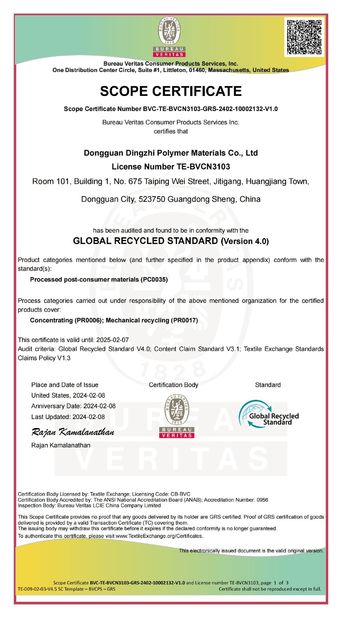
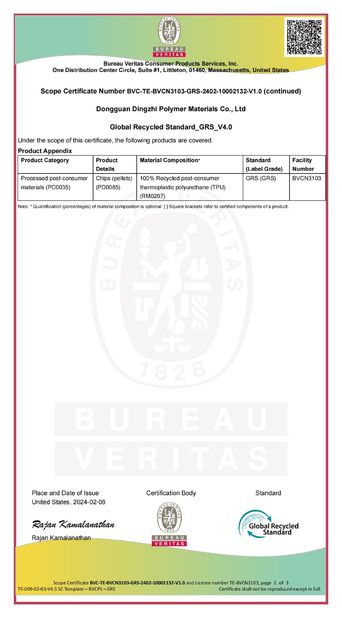
As global awareness of environmental protection and sustainable development continues to grow, companies worldwide are seeking ways to demonstrate their commitment to environmental and social responsibility. The Global Recycled Standard (GRS) certification has emerged as a crucial verification system in this context—not merely as a certification, but as a commitment to sustainability that serves as a passport to broader market opportunities.
1. Sustainability: The Defining Theme of Our Era
Sustainability has become the defining theme of our time. With global population growth and increasing resource depletion, humanity faces unprecedented environmental challenges. Climate change, resource scarcity, and environmental pollution threaten our survival and development. In this context, the concept of sustainable development has emerged as a global consensus.
Sustainable development refers to a model that meets current needs without compromising future generations' ability to meet theirs. It emphasizes coordinated development across economic, social, and environmental dimensions, aiming for harmonious coexistence between humanity and nature. This concept represents not just a development model but also a set of values and lifestyle principles that require fundamental changes in consumption patterns and production methods.
2. The Awakening of Consumer Consciousness
As living standards improve, consumer expectations for products have evolved beyond price and quality to include environmental impact and social responsibility. Increasingly, consumers choose eco-friendly products and support companies demonstrating environmental and social responsibility.
This shift presents new challenges for businesses. Companies must now deliver high-quality products while ensuring environmentally responsible production processes that meet social responsibility standards. Only those meeting these evolving consumer demands can maintain competitive advantage.
3. GRS Certification: Meeting the Moment
The Global Recycled Standard was developed by Textile Exchange, a non-profit organization dedicated to advancing sustainability in the textile industry. This voluntary certification system encourages increased use of recycled materials while minimizing negative environmental and social impacts throughout production.
GRS certification evaluates not only recycled content but also fair labor practices, worker safety, and strict limitations on hazardous chemical use, ensuring every production stage meets sustainability requirements from raw materials to finished products.
4. The Value of GRS Certification: Beyond Environmental Benefits
GRS certification offers companies multiple strategic advantages:
4.1 Enhanced Brand Image
In today's sustainability-conscious marketplace, GRS certification provides tangible proof of environmental commitment, building consumer trust and loyalty. Certified products appeal to environmentally aware consumers, strengthening brand value and competitive positioning.
4.2 Expanded Market Opportunities
Major retailers and brands increasingly require GRS certification from suppliers to meet their own sustainability goals. Certification opens doors to new business partnerships with sustainability-focused companies.
4.3 Optimized Supply Chain Management
GRS requirements for rigorous supply chain oversight improve transparency and traceability while reducing operational risks. The certification process helps companies identify and address potential issues throughout their supply networks.
4.4 Reduced Environmental Impact
By promoting recycled material use, GRS certification decreases dependence on virgin resources while lowering energy consumption and pollution—delivering measurable environmental benefits.
5. The GRS Certification Process: A Step-by-Step Guide
Obtaining GRS certification requires comprehensive compliance throughout supply chains and production processes:
5.1 Verify Supplier Certification Status
The GRS "Chain of Custody" requirement mandates that every supply chain participant—from recycling to final production—must hold certification. Companies should confirm supplier certification status before applying.
5.2 Select an Accredited Certification Body
Textile Exchange authorizes independent third-party certification bodies to conduct GRS audits. Companies should evaluate potential partners based on accreditation, experience, service scope, and pricing.
5.3 Conduct Internal Audits and Preparation
Prior to formal audits, companies must thoroughly review their operations for GRS compliance, including:
-
Verifying recycled material sources and authenticity
-
Establishing complete chain-of-custody documentation
-
Evaluating social and environmental practices
-
Preparing quality management system documentation
5.4 Undergo On-Site Audit
Certification bodies conduct facility inspections to verify documentation accuracy and assess production process compliance. Auditors typically examine equipment, warehouses, laboratories, and interview personnel.
5.5 Receive GRS Certification
Successful applicants receive GRS certification valid for one year, requiring annual renewal to maintain certified status.
6. Key Certification Components: Transaction and Scope Certificates
The GRS system relies on two critical documents:
6.1 Scope Certificate (SC)
Issued to each supply chain participant, the SC verifies capability to produce GRS-compliant products. Each company must complete certification to obtain its SC.
6.2 Transaction Certificate (TC)
Required for each material or product transaction, the TC documents composition, weight, and other relevant details—serving as proof of GRS compliance throughout the supply chain.
7. Defining Recycled Materials: Pre- vs. Post-Consumer
GRS categorizes recycled materials as:
7.1 Pre-Consumer Recycled Materials
Production waste that never reached consumers, such as textile mill scraps or plastic manufacturing remnants.
7.2 Post-Consumer Recycled Materials
Previously consumer-used items like plastic bottles or discarded textiles that have been recovered for reuse.
GRS establishes strict requirements for both categories regarding sourcing, collection, and processing to ensure authenticity and traceability.
8. The Business Case for GRS Certification
Forward-thinking companies recognize GRS certification as more than compliance—it represents strategic investment in sustainable business practices that deliver competitive advantage while addressing pressing environmental challenges.
9. Conclusion
GRS certification serves as both market differentiator and sustainability commitment. Certified companies gain consumer trust, access new markets, and contribute meaningfully to environmental protection. As sustainability expectations continue rising across industries, GRS certification positions companies for long-term success in an increasingly eco-conscious global marketplace.


 Your message must be between 20-3,000 characters!
 English